
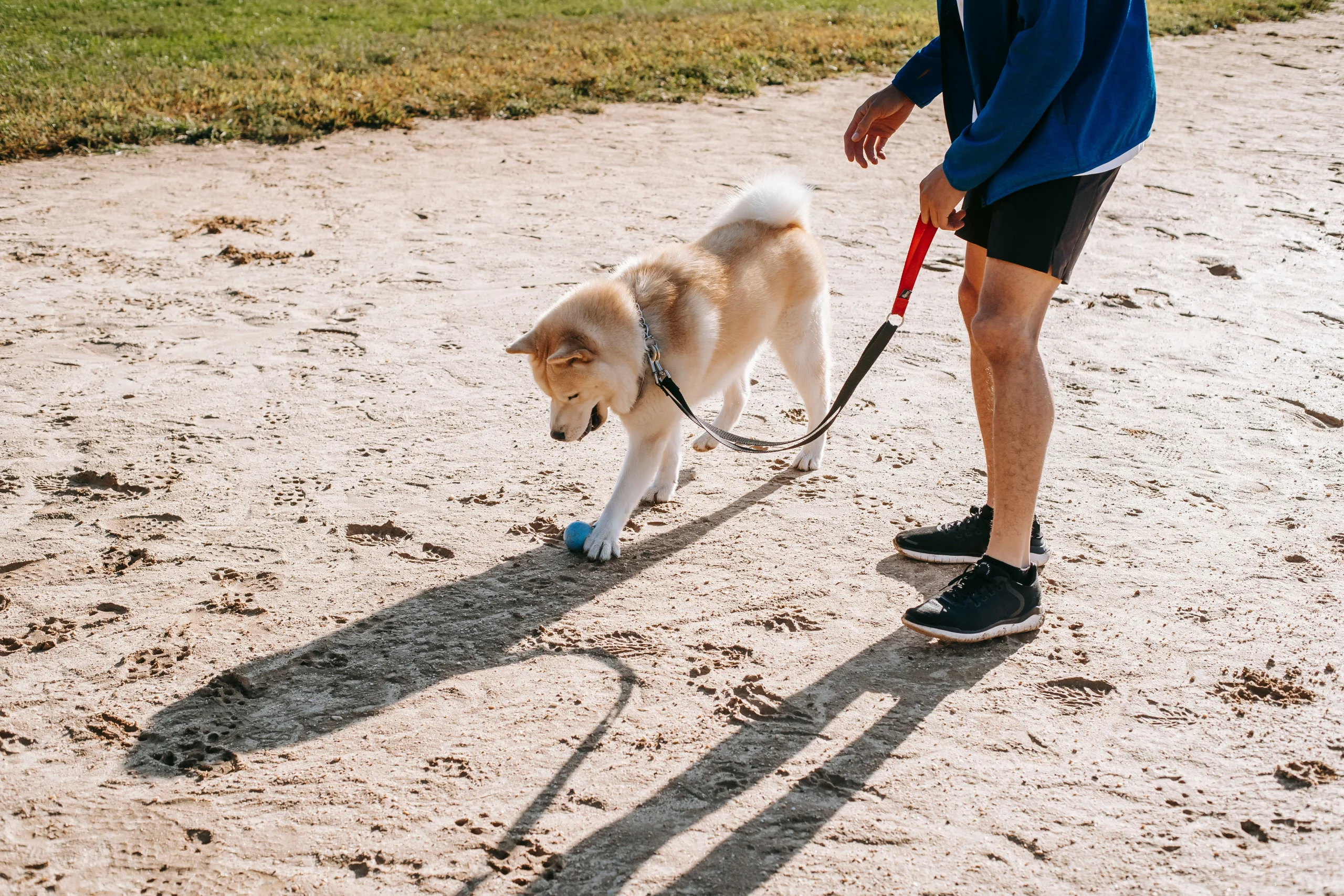
A dog can have a fenced yard, a basket full of toys, and even a daily walk—and still not be getting enough meaningful exercise.
The real question is not whether your dog gets some activity. It is whether the amount, type, and consistency of that activity meet your individual dog’s needs. Age, breed, health, body condition, temperament, confidence, and daily routine all matter. The American Animal Hospital Association recommends exercise, mental stimulation, and enrichment tailored to a dog’s age, breed, and temperament rather than a one-size-fits-all number of minutes.
When those needs are not being met, dogs rarely send a polite memo. They show us through their behavior, their bodies, and their ability—or inability—to settle.
Here are seven signs that your dog may need a better exercise plan, along with practical ways to respond.
1. Your Dog Struggles to Settle
Some dogs are naturally busy, but there is a difference between being energetic and being unable to relax. A dog who paces, shadows you from room to room, repeatedly brings toys, nudges for attention, or constantly gets up after lying down may have energy with nowhere productive to go.
Exercise is not the only possible cause. Anxiety, discomfort, changes in the household, and learned attention-seeking can look similar. But if your dog settles more easily after an appropriate physical and mental outlet, insufficient activity may be part of the picture.
What to do: Create a predictable daily rhythm that includes purposeful movement, opportunities to sniff and explore, short periods of mental work, and protected rest. Do not simply add nonstop activity. The goal is a dog who can engage when it is time to work and settle when the activity is over.
2. Chewing, Digging, and Destruction Are Becoming Regular Events
Dogs need appropriate outlets for natural behaviors. When those outlets are missing, a couch cushion, trash can, garden bed, or favorite shoe may become the day’s entertainment.
The AAHA’s enrichment guidance notes that unmet needs for energy, curiosity, and instinctive behavior can appear as chewing, barking, scratching, and other unwanted behavior. This does not mean destruction is always an exercise problem. Puppies explore with their mouths, and dogs with separation-related distress may damage things because they are panicking—not because they need to run farther.
What to do: Combine physical exercise with legal chewing options, food puzzles, scatter feeding, scent games, and sensible management. If the destruction happens primarily when your dog is alone and is accompanied by frantic barking, drooling, escape attempts, or house-soiling, speak with your veterinarian or a qualified behavior professional rather than trying to exhaust the problem away.
3. Barking, Mouthing, Jumping, and Attention-Seeking Keep Escalating
When a dog has no appropriate job, the dog often invents one. Demand barking, grabbing clothing, mouthing hands, stealing household items, or repeatedly jumping on family members can become highly effective ways to start interaction.
Exercise can reduce the pressure behind these behaviors, but it does not teach manners by itself. In fact, if every outburst earns immediate play or attention, the dog may learn that being disruptive works.
What to do: Provide an appropriate exercise outlet before the time of day when behavior usually falls apart. Pair that outlet with clear household expectations and reinforce calm choices. Exercise helps make better behavior more achievable; training and consistency teach the dog what that better behavior is.
4. Your Dog Has Explosive Bursts of Energy
Occasional “zoomies” can be completely normal. However, repeated episodes of frantic running, crashing into furniture, pestering other pets, or becoming wild at the same time every day may signal that your dog’s routine lacks an adequate outlet.
Watch the pattern. Does the behavior appear after hours of inactivity? Is it worse on days when walks are skipped or shortened? Does your dog remain restless even after the burst is over? A pattern matters more than one energetic moment.
What to do: Schedule activity instead of waiting for your dog to reach the boiling point. A well-timed walk, structured exercise session, sniffing opportunity, or interactive game earlier in the day may prevent energy from accumulating into chaos. Finish with a calm cool-down so your dog practices returning to a settled state.
5. Your Dog Becomes Overwhelmingly Excited When Activity Begins
If touching the leash creates barking, spinning, lunging at the door, or complete loss of responsiveness, the outing may have become the only meaningful event in your dog’s day. Scarcity can make anticipation explode.
That said, intense behavior around dogs, people, bicycles, or vehicles can also reflect fear, frustration, or reactivity. More exercise may support a broader behavior plan, but it will not change the underlying emotional response by itself. Trying to “wear out” a reactive dog is not a treatment plan.
What to do: Increase the consistency of appropriate outlets while separately working on calm departures, impulse control, and the dog’s specific triggers. If reactivity is involved, use distance and professional guidance. Cornell University’s veterinary behavior guidance emphasizes identifying triggers and using a planned behavior-modification approach rather than repeatedly immersing a dog in situations it cannot handle.
6. Your Dog Is Gaining Weight or Losing Muscle Condition
Weight gain is not proof of too little exercise; calorie intake, medications, hormones, age, pain, and disease can all contribute. Still, when a dog’s activity drops while food remains the same, the math can catch up quickly.
You may notice that your dog’s waist is less visible, the ribs are harder to feel, or muscles over the back and hindquarters look less defined. These changes matter because excess weight can make movement harder, which can lead to even less activity.
What to do: Ask your veterinarian to assess both body condition and muscle condition. Review food portions, treats, and activity together rather than attempting to solve weight gain through extreme exercise. Once your dog is cleared, build a consistent program gradually and monitor trends over time.
7. Your Dog’s Stamina Is Declining
A dog who rarely exercises may become deconditioned. You might notice slowing down sooner, lagging behind, needing longer recovery, or showing less enthusiasm for activity that was once easy.
Do not automatically label this laziness or assume that harder exercise is the answer. Reduced stamina can also signal pain, arthritis, heart or respiratory disease, obesity, heat stress, or another medical problem— especially when the change is sudden.
What to do: Start with a veterinary conversation, particularly for senior dogs, dogs with medical conditions, or any dog showing a meaningful change. Once medically cleared, increase activity in small, individualized steps. Progress should be based on comfortable movement and recovery, not on forcing a particular speed, distance, or performance.
How Much Exercise Does a Dog Actually Need?
There is no honest universal answer.
A young, healthy working-breed dog and an older dog with arthritis should not follow the same plan. Neither should a confident athlete and a nervous dog who is learning how to move on unfamiliar equipment. More is not automatically better, and exhaustion is not the goal.
A complete plan should include:
- Purposeful physical activity appropriate for the dog’s health and conditioning
- Mental enrichment such as sniffing, problem-solving, training, and foraging
- Consistency so activity is part of the routine rather than an occasional marathon ● Gradual progression with warm-up, cool-down, rest breaks, and recovery
- Observation of gait, breathing, enthusiasm, comfort, and behavior after exercise
- Rest so the dog can recover and learn to settle
The best plan is not the one that produces the most exhausted dog. It is the one that leaves the dog appropriately fulfilled, comfortable, and able to function well at home.
August Heat Can Make the Exercise Gap Worse
During a Southern New England summer, the exercise your dog normally receives may quietly shrink. Walks get shorter, outdoor play becomes less consistent, and hot pavement can make usual routes unsafe. The American Veterinary Medical Association advises avoiding hot surfaces and strenuous activity during the hottest part of the day.
Move outdoor activity to cooler times, choose safer surfaces, bring water, and adjust intensity for humidity and the individual dog. If the weather repeatedly prevents adequate activity, use appropriate indoor options rather than trying to cram everything into one hard weekend outing.
Where MOMENTUM™ Fits
MOMENTUM™ by The Canine Suite provides structured canine exercise in a climate-controlled mobile dog gym serving Connecticut and Massachusetts. Sessions take place one dog at a time on professional, nonmotorized, dog-powered slat mills. The dog controls the pace, acceleration, deceleration, and stopping while being guided and closely monitored.
Every dog is introduced and progressed as an individual. Sessions include a gradual warm-up and cooldown, appropriate harnessing, observation, rest breaks, and modifications based on the dog’s age, fitness, confidence, experience, and veterinary guidance. The goal is never to force a performance or run a dog to exhaustion.
MOMENTUM™ does not replace walks, sniffing, outdoor activity, training, enrichment, or veterinary care. It is another tool—a structured, weather-independent outlet for dogs whose needs exceed what a casual walk or an overloaded schedule can reliably provide.
The Bottom Line
Do not wait until frustration becomes destruction or inactivity becomes poor conditioning. Pay attention to patterns: how easily your dog settles, what happens on low-activity days, how the body is changing, and how well the dog recovers after movement.
If several of these signs sound familiar, your dog may not need punishment or another toy. Your dog may need a more complete plan.
Want to find out whether structured exercise is appropriate for your dog? Ask about a MOMENTUM™ Discovery Run.
Call or text 413-767-4416, email hello@k9suite.com, or explore MOMENTUM™ online.
The Canine Suite does not provide veterinary care. Exercise carries inherent risk and may not be appropriate for every dog. Consult your veterinarian before beginning or significantly changing an exercise program if your dog has a medical condition, pain, exercise intolerance, is a senior, or has experienced a sudden change in behavior, mobility, weight, or stamina.