
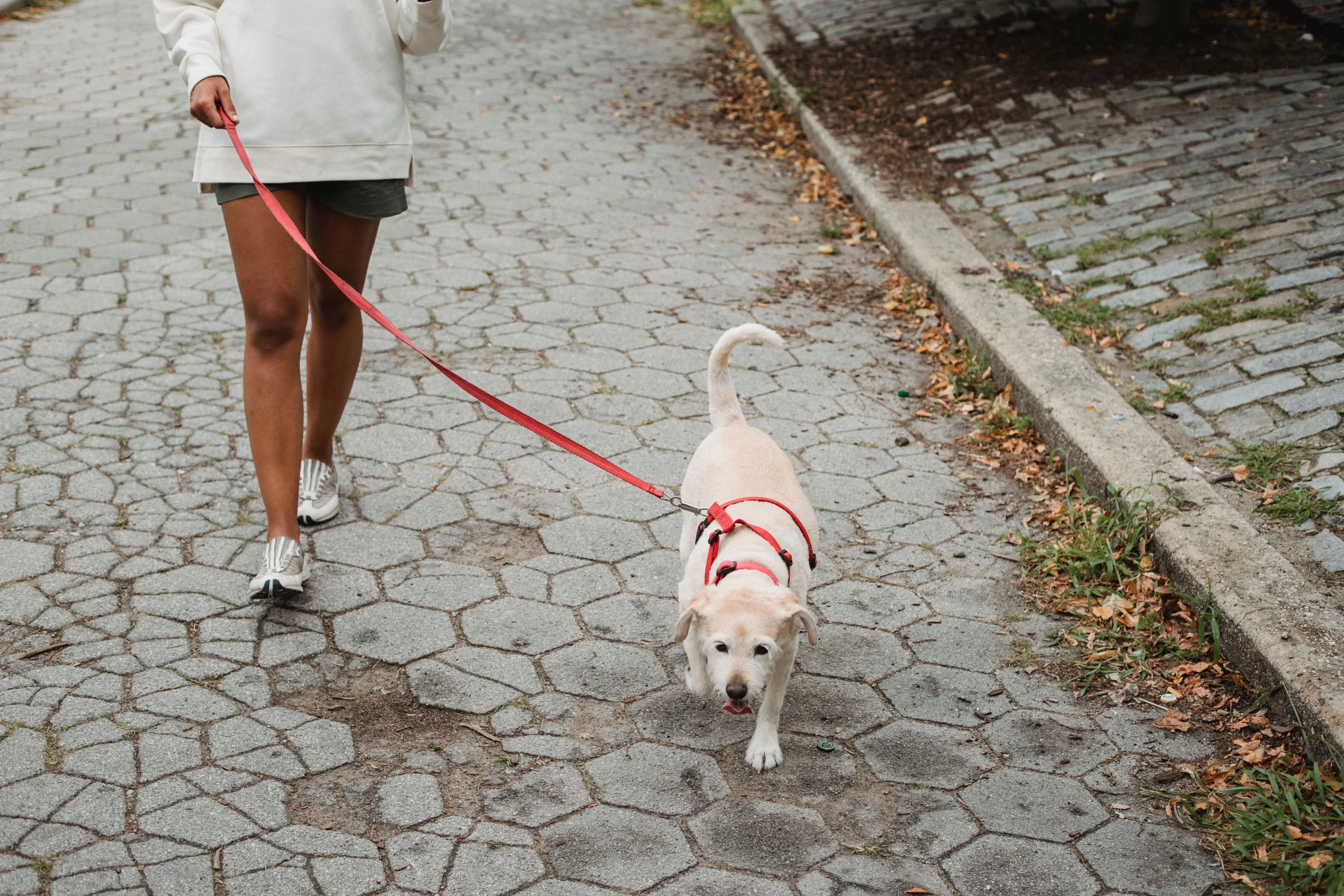
As the days get shorter, your dog’s exercise routine can shrink without anyone making a conscious decision. The morning walk gets rushed. The after-work outing happens in the dark. Rain, cold, and busy schedules turn “we’ll make it up tomorrow” into several low-activity days in a row.
That change can show up at home: a dog who is restless in the evening, pesters you for attention, has trouble settling, or seems to have endless energy. The answer is not always a longer walk. A more reliable fall routine usually comes from combining shorter movement sessions, mental work, structured play, and a few weather-proof options.
Here’s how to keep your dog active when daylight disappears—without trying to turn every day into an endurance event.
1. Notice where your routine is breaking down
Start by looking at your actual week, not the ideal version of it. When does your dog usually get the most movement? Which activities disappear when it rains or gets dark? Is your dog receiving physical exercise, sniffing time, training, and enough rest—or mostly quick bathroom breaks?
This matters because dogs do not need one specific type of exercise every day. They need an age- and health-appropriate mix that happens consistently. A young, athletic dog may need more vigorous activity, while a senior dog may benefit from several gentle sessions and careful recovery. If your dog is gaining weight, tiring quickly, limping, coughing, or showing a sudden behavior change, talk with your veterinarian before increasing exercise.
2. Make walks shorter, safer, and more intentional
A shorter walk still counts. When daylight is limited, replace the expectation of one long outing with two or three purposeful trips when possible.
Let one walk be a sniffing walk. Give your dog time to investigate safe smells instead of covering maximum distance. Let another focus on steady movement and loose-leash skills. Even 10–20 minutes of attentive walking can be useful when it is part of a predictable routine.
As the season changes:
- Use reflective gear or lights for both you and your dog.
- Choose well-lit routes with clear footing.
- Check pavement, ice, salt, and de-icing chemicals before and after walks.
- Adjust the pace and distance for temperature, age, coat, and health.
- Watch for shivering, lifting paws, excessive panting, reluctance to continue, or other signs of discomfort.
Safety is more important than completing a certain number of miles.
3. Add more value to the time you already have
When you cannot add a long walk, add purpose to a short session. A few minutes of training can make your dog think and move at the same time. Practice sit, down, stand, hand targeting, place, recall, or calm leash exits. Keep repetitions short and reward the behavior you want.
You can also turn ordinary routines into enrichment:
- Scatter part of a meal in a safe area and let your dog search.
- Hide treats or toys for a supervised “find it” game.
- Use a food puzzle or stuffed toy.
- Practice gentle tug with clear start and stop cues.
- Rotate toys instead of leaving every toy available all the time.
Mental work is not a substitute for all physical activity, but it is an important part of a balanced routine—especially on difficult-weather days.
4. Create an indoor movement menu
A weather-proof plan works best when you decide in advance what is safe in your home. Depending on your space and your dog, an indoor session might include a short training circuit, controlled toy play, walking through simple position changes, or a game of searching for kibble.
Avoid turning a slippery floor or a narrow hallway into a high-speed racetrack. Repeated sharp turns, uncontrolled jumping, and frantic chasing can create unnecessary strain or overstimulation. Give your dog breaks, use non-slip surfaces where possible, and stop while the session is still going well.
If your dog needs more room or more structured effort than your home can provide, climate-controlled canine exercise can be another option. A dog-powered treadmill or slat mill should be introduced gradually and supervised by someone who understands safe pacing, warm-up, cool-down, and recovery. It should be one part of a varied plan—not a way to push a dog past fatigue.
5. Protect paws, joints, and recovery
Cold weather changes more than the clock. Wet ground, salt, frozen surfaces, and stiff muscles can all affect how comfortable your dog feels.
Check paws after outdoor activity and gently remove ice, salt, or debris. Keep nails at an appropriate length for traction. On colder days, start with an easier warm-up instead of immediately asking for fast movement. After activity, allow quiet recovery and fresh water.
Pay attention to changes that persist: stiffness after rest, reluctance to use stairs, a shortened stride, licking at a joint, or a new reluctance to play. These are reasons to pause and ask your veterinarian for guidance, not signs that your dog simply needs to “push through.”
6. Build a weekly schedule instead of improvising
Consistency becomes easier when the plan is visible. Try creating a simple weekly menu with a few categories:
- Movement: walks, hikes, controlled play, or structured fitness
- Mental work: sniffing, puzzles, training, or searching games
- Recovery: calm time, chewing, mat work, and sleep
- Weather-proof backup: an indoor activity for days when the normal plan fails
For example, a week might include a sniffing walk each morning, short training after dinner, two longer outings on lighter-work days, and one or two structured indoor exercise sessions. The exact schedule will depend on your dog. The goal is to avoid having every activity depend on perfect weather or a large block of free time.
Track your dog’s response for a week. Are they settling more easily? Do they seem tired in a healthy way, or overstimulated and unable to rest? Are they moving comfortably the next day? Use those observations to adjust frequency and intensity gradually.
7. Know when exercise is only part of the answer
More activity can help with boredom, conditioning, sleep, and general well-being. It does not automatically resolve separation anxiety, fear, reactivity, pain, or every training challenge. Some dogs become more frantic when exercise is only fast, exciting play without a calm follow-up.
Pair movement with an off-switch: a chew, a quiet sniffing activity, a settle on a mat, or protected rest. If your dog’s behavior changes suddenly, seems extreme, or comes with appetite changes, limping, coughing, breathing difficulty, or unusual fatigue, start with your veterinarian and involve a qualified trainer when appropriate.
A realistic fall plan
You do not need a perfect routine to keep your dog active through fall and winter. Start with one dependable anchor: a morning walk, a midday sniff break, or a short structured session after work. Add one weather-proof backup and one calm recovery activity. Then repeat the plan often enough for it to become normal.
For dog owners looking for indoor dog exercise in Connecticut, Momentum can be one piece of that larger routine. Structured, dog-powered exercise may help when darkness, weather, or a busy schedule makes consistent outdoor activity difficult. The right starting point depends on your dog’s age, conditioning, comfort, and temperament, so sessions should be introduced at an appropriate pace.
If your dog needs a more reliable outlet before winter arrives, schedule a Momentum Discovery Run. We’ll talk through your dog’s current routine and help you decide whether structured exercise, better walks, enrichment, or a combination makes the most sense.